RPA Export from Blueprint
Blueprint integrates with a number of RPA tools to accelerate and scale robot development. Users can push their business processes complete with detailed information to Power Automate Desktop (PAD).…

Updated
by Sean Ellner
Blueprint integrates with a number of RPA tools to accelerate and scale robot development. Users can push their business processes complete with detailed information to Power Automate Desktop (PAD).
All RPA tools require some administrative setup to utilize. Please see Configuring RPA Export for more information.
To Export
Blueprint allows for single or bulk exports to the RPA tool of your choosing.
Steps to Export:
- Select the items to export:
- If exporting multiple processes, select the parent folder containing the processes you would like to export.
- If exporting a single process, select just the process from the Explorer on the left side.
- Initiate the export. Click the Export dropdown on the right side of the page and choose one of three options:
- Export Descendants to Power Automate Desktop: Exports the selected process(es) without opening the Rules Wizard.
- Export Descendants to Power Automate Desktop with Rules: Exports the selected process(es) and opens the Rules Wizard so you can configure and confirm the rules applied to this export.
- Export as Library/VBO (available only when Enable Rules is on): Exports the selected process(es) as individual, reusable desktop flows. See Exporting Reusable Flows for details.
- Follow the export prompts:
- Complete the Rules Wizard (only if you chose "Export Descendants to Power Automate Desktop with Rules"). The wizard walks you through creating and applying rules for your export. See the Rules Wizard documentation for details. The wizard helps you:
- Consolidate code using Reuse functionality
- Set up Work Queues
- Map Unresolved References
- Complete the Rules Wizard (only if you chose "Export Descendants to Power Automate Desktop with Rules"). The wizard walks you through creating and applying rules for your export. See the Rules Wizard documentation for details. The wizard helps you:
- Select Items to Export - A modal opens where you can review and confirm which processes to include
- Note: When exporting to PAD (Power Automate Desktop), any included subprocesses will automatically be converted to subflows.
- Adjust your settings:
- Enable Local Variables: When enabled, the flow exports to PAD with local variables. Exports with local variables almost always have reduced code complexity and fewer generated variables.
- Variable Prefix: Appears only when Enable Local Variables is off. When enabled, Blueprint automatically prefixes variable names in subflows to prevent naming conflicts across processes.
- Add Subflows: Manually include additional processes as subflows, even if they aren't part of the original process hierarchy. Especially useful if your process contains variablized subprocesses that Blueprint can't automatically link during export.
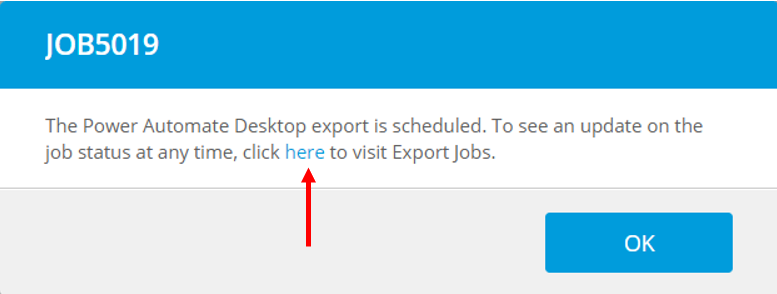
- A notification is displayed indicating that the RPA export has been scheduled. You can click the link in the message to view the operation on the Jobs page
- Once the job is completed, you may either download the result directly or see that it's been integrated automatically. In this example, it will appear in Power Automate Desktop via an API connection.You may need to refresh Power Automate Desktop to see the exported process.
How did we do?
Variable Prefixing